As an Amazon Associate, we earn from qualifying purchases. Some links on this site are affiliate links at no extra cost to you. Our recommendations are based on thorough research and editorial judgment.


Understanding Ice Maker Capacities: Daily Output Vs Bin Storage

Understanding ice maker capacities is vital for efficient operation. We need to ascertain daily output aligns with storage bin capacity. For example, a café requiring 100 pounds of ice daily should have a bin that holds at least 50 pounds to maintain ice quality and meet demand. Factors like ideal operating temperatures and water quality also play a role. By carefully considering these elements, we can enhance performance and minimize service delays. There’s more to explore on this topic.
Key Takeaways
- Ice machines produce varying daily outputs (50-300 lbs for low, 300-1,000 lbs for medium, and over 1,000 lbs for high-capacity machines).
- Aligning production capacity with bin storage is crucial; bins should hold at least half of daily output for optimal efficiency.
- Factors like operating temperature, cleaning, ventilation, and water quality impact daily ice production consistency.
- Estimating ice needs involves a guideline of 1-2 pounds per customer, adjusting for peak hours and seasonal changes.
- Consulting with experts and conducting regular maintenance help ensure ice machines perform optimally and meet demand effectively.
Understanding Ice Machine Capacity
When we talk about ice machine capacity, we’re really focusing on how much ice a machine can make in a day. This capacity, measured in pounds or kilograms, is fundamental for meeting our ice needs. For instance, a small café might need a machine with a production capacity of around 100 pounds daily, while larger establishments may require thousands of pounds. It’s essential to understand that storage capacity also plays a role; if our ice machine can produce more than it can store, we risk running out during peak hours. Factors like temperature and water quality can affect production as well, so regular maintenance is critical to guarantee reliable output. Knowing these details helps us choose the right ice maker for our business. This is particularly relevant when considering the daily output range of different models, which can significantly impact operational efficiency.
The Importance of Matching Production and Storage

To guarantee a steady supply of ice during busy times, it’s critical to match the production capacity of our ice maker with its storage bin capacity. For peak performance, the storage bin should hold at least half of the production capacity. For instance, if our ice maker produces 1,000 pounds of ice daily, the bin should store at least 500 pounds. This prevents frequent emptying and refills, enhancing ice availability. When there’s insufficient matching, we risk operational efficiencies declining, leading to service delays and customer dissatisfaction. Additionally, properly sizing both capacities helps reduce excess melting. This maintains the ice remains crunchy and ready for use longer, providing the best experience for our customers who enjoy fishy drinks or other chilled items. To support this, utilizing equipment with ideal storage capacities can further optimize performance during peak demand periods.
Ice Maker Capacity Defined

Understanding ice maker capacity is essential for any business that relies on a steady ice supply. Ice maker capacity measures how much ice, or the 24-hour yield, a machine can produce daily. This capacity is often listed in pounds or kilograms, which allows us to assess our needs accurately. For commercial ice makers, production capacity refers to the actual ice produced, while storage capacity indicates how much ice the unit can hold. A good rule of thumb is to guarantee our storage capacity is at least half of the production capacity. Balancing these two capacities guarantees we avoid overflow or shortages, keeping our operations running smoothly during peak hours when customers expect that fizzy drink with ice or a crunchy ice serving. Many nugget ice makers produce between 33 to 44 lbs of ice daily, which is essential for understanding your ice needs.
Factors Influencing Daily Ice Output

Although many of us expect our ice makers to produce a consistent supply of ice, several factors can impact their daily output. Ice production is influenced by machine capacity, which varies across models. Typically, optimal performance occurs at 70°F air and 50°F water; however, these ideal conditions aren’t always met. When ambient air temperatures rise, or if water temperature increases, we may notice a marked decrease in ice production. It’s essential to maintain our ice makers through regular cleaning and ensuring proper ventilation. These actions help keep efficiency high and maximize the potential output of our ice bins. By staying aware of these factors, we can better understand and manage our ice maker’s daily performance capabilities. Maintaining a high ice production capacity is crucial for meeting increased demand, especially in commercial settings.
Recommended Products
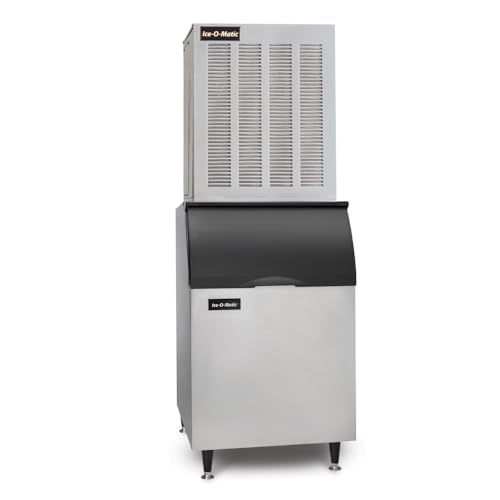
Commercial Ice Maker Head with Storage, (GEM1306A+KBT19+B55PS), High Production Capacity: Produces approximately 1350 lbs (612 kg) of soft, chewable ice crystals per day, ensuring a constant and reliable ice supply for even the busiest establishments.

Manitowoc Indigo NXT Series Commercial Ice Maker Machine | Half Cube, 1965 lb/Day, Head Only – IYT1900A Massive Ice Production: Produces up to 1965 lbs of half-cube ice per day at 70°F/50°F, AHRI certified for 1535 lbs at 90°F/70°F, ensuring an abundant ice supply for high-demand operations.

Sealed, maintenance-free bearings for reduced preventative maintenance and long-lasting performance
Types of Ice Machines and Their Capacities

When choosing the right ice machine, we need to contemplate the specific demands of our businesses. There are three main types of ice machines based on their capacity. Low-capacity machines, producing 50 to 300 pounds of ice daily, fit well in small cafes and offices. Medium-capacity machines generate between 300 and 1,000 pounds, ideal for mid-sized restaurants and catering services. Finally, high-capacity machines churn out over 1,000 pounds daily, essential for large hotels and seafood processors. Each machine’s capacity is significant, as it determines daily output and storage capacity. Selecting the appropriate type helps minimize disruptions, ensuring we have the right amount of crunchy or fizzy ice ready for any situation. Understanding ice production rates can also aid in making a knowledgeable choice for your establishment.
Recommended Products
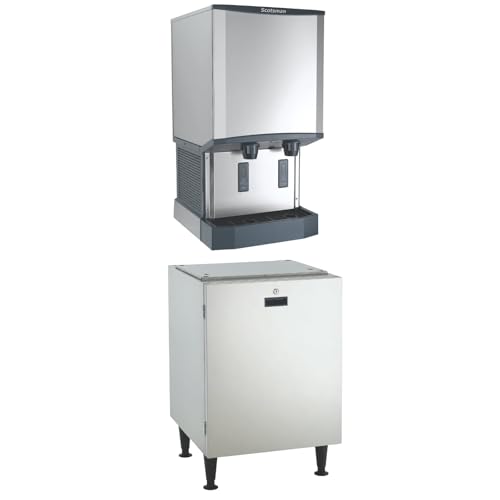
Commercial nugget ice maker, Ice and Water Dispenser with Storage (HID540A-1+HST21-A): Produces up to 500 lb of H2 Nugget Ice daily, ensuring a continuous and reliable supply for high-demand settings.

BEAUTIFUL DESIGN: Sleek, high-tech styled design with stainless steel exterior Improved condenser fan provides quiet operation

Manitowoc Indigo NXT Series Commercial Ice Maker Machine | Full Cube, 1196 lb/Day, Head Only – IDT1200A Unrivaled Ice Production: Produces up to 1196 lbs of full-cube ice per day at 70°F/50°F, ensuring a reliable supply for busy commercial environments.
Calculating Your Daily Ice Needs
To guarantee we meet our ice needs, calculating daily requirements is essential. For restaurants, it’s safe to estimate 1-2 pounds of ice per customer. We should consider our peak hours when evaluating ice usage since demand often rises during busy times. For mid-sized operations, aiming for ice storage capacities of 100-300 pounds is prudent. This guarantees we have enough ice on hand for those peak shifts. We must also account for seasonal changes; warmer months typically lead to increased beverage sales and higher daily ice needs. Regularly monitoring our ice usage patterns allows us to adjust our capacity needs accordingly. By staying proactive, we’ll guarantee we always have an adequate supply of crunchy ice for our customers. Additionally, understanding the daily production capacity of various ice maker models can help us determine the right equipment for maintaining these needs.
Assessing Storage Bin Capacities
Ice storage capacity plays a significant role in guaranteeing we meet our daily ice needs effectively. When we choose the right ice bin, we must consider its storage capacity. For instance, a Hoshizaki B-500 bin is rated for 500 pounds, but realistically, it holds about 400 pounds due to uneven ice formation. This impacts our operational efficiency because inadequate storage can lead to frequent refills. Proper sizing prevents ice overflow, minimizing waste and keeping a sufficient supply on hand. Bins with overfilling switches help us manage storage levels effectively. By understanding these aspects, we can guarantee better ice quality and reduce the risk of melting, making our operation efficient during peak demand times. Additionally, assessing daily ice production rates ensures that our chosen bin can adequately support our ice needs throughout the day.
Recommended Products
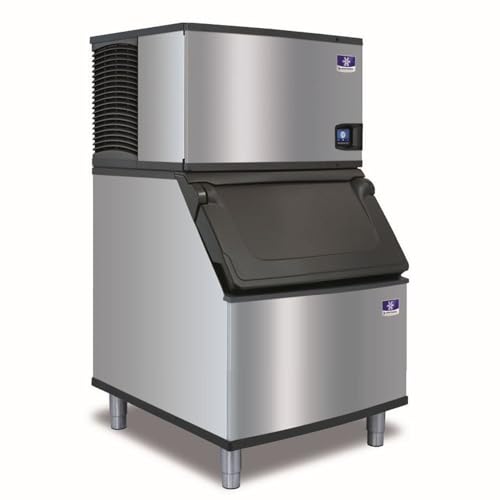
Manitowoc Indigo NXT Series Commercial Ice Maker Machine | Half Cube, 1965 lb/Day with D970 Storage Bin – IYT1900A+D970 High-Volume Ice Storage: Delivers up to 1965 lbs of ice per day at 70°F/50°F, AHRI certified for 1535 lbs at 90°F/70°F, and includes a D970 storage bin for efficient ice management.

Ice-O-Matic - GEMD270A2 - 273 lb Pearl Ice Air Cooled Ice Maker with Water Dispenser

Makes 520 lbs of 7/8" x 7/8" x 7/8" dice size ice cubes per day!
Peak Demand Considerations
Understanding peak demand periods is essential for any business relying on ice. During peak times like weekends or holidays, we see an increase in ice consumption. Restaurants might need 2-3 pounds of ice per customer. This can total thousands of pounds in busy settings. To guarantee reliable ice, our ice machine should exceed daily estimates by 20-30%. This way, we have the maximum capacity during unexpected spikes. Additionally, larger storage bins help minimize frequent refills, especially in high-volume venues like bars or events. By monitoring sales data and recognizing peak hours, we can accurately forecast ice needs. This allows us to select machines with the appropriate production and storage capacities for peak performance. Moreover, high-capacity units are particularly suited for large gatherings, providing an efficient solution for both personal and business ice demands.
Recommended Products

Commercial Ice Maker Head with Storage, (GEM1306A+KBT24+B42PS), High Production Capacity: Produces approximately 1350 lbs (612 kg) of soft, chewable ice crystals per day, ensuring a constant and reliable ice supply for even the busiest establishments.


High Production Capacity: Produces up to 315 pounds of nugget-style ice every 24 hours at 70°F/50°F, and 222 pounds at 90°F/70°F, ensuring a steady supply for various needs.
External Factors Affecting Ice Production
While we often focus on the ice maker’s capacity, external factors play an important role in its performance. For instance, external temperatures greatly affect ice production. Ice machines typically operate best at 70°F air and 50°F water, as stated by the AHRI Capacity ratings. Warmer water can slow production and compromise ice quality. Additionally, maintenance practices are crucial; regularly cleaning the condenser and ensuring proper ventilation can improve efficiency. Water quality is another consideration—impurities can affect the clarity and texture of ice. If we prioritize these factors, we’ll optimize our ice maker performance, ensuring consistent production of crunchy, clear ice. Moreover, many models feature digital control panels that help monitor and manage the production process effectively. By understanding these elements, we can make better decisions for our specific needs.
Tips for Choosing the Right Ice Machine
Choosing the right ice machine can markedly impact our business operations. First, we need to assess the daily ice output required, especially during peak times. For restaurants, estimate about 1-2 pounds of ice per customer. Next, make certain the storage capacity aligns with this output, ideally having at least half the daily output in storage to avoid constant refills. It’s also essential to take into account the type of ice our business needs; whether we require cubes for fizzy drinks or flaky ice for food presentation can influence our choice. Finally, monitor seasonal changes in customer volume. Consulting with industry experts can help us find the perfect balance between production and storage capacities, making sure we meet our business needs efficiently. Additionally, selecting models with daily production capacities of 26 to 34 pounds can ensure a steady supply of ice while minimizing interruptions in service.
Recommended Products

MAXIMIZE ICE PRODUCTION: This air-cooled commercial ice maker machine is capable of producing up to 470 lbs. of ice in 24 hours, ensuring consistent supply even during peak demands in your business.

High-Capacity Commercial Ice Machine: The ZXWEQR commercial ice maker stands out as a top-tier commercial ice machine, delivering over 2,000 pounds of ice daily—perfect for businesses with high-volume needs. This robust commercial ice maker machine features a spacious storage bin that holds up to 1003 pounds of ice, ensuring a consistent, on-demand supply even during peak hours. At its core, a high-performance compressor drives fast and efficient ice production, eliminating downtime and keeping your operations running smoothly

2000Lbs Daily Ice Production for Commercial Demand: Built for high-volume commercial environments, this ice maker machine produces up to 2000 lbs of ice every 24 hours and stores up to 1003 lbs of ice at a time. Designed to support restaurants, bars, cafes, hotels, kitchens, and event venues during peak business hours without interruption.
Benefits of Proper Ice Management
Proper ice management makes a huge difference in any business that relies on ice for service. When we maintain the right balance between ice production capacity and storage bin size, we guarantee there’s always enough ice during peak hours. This leads to faster service and enhanced customer satisfaction. An adequately sized storage bin typically holds 80-85% of its rated capacity, maximizing usable ice and minimizing waste. By reducing frequent refills, we optimize labor time and minimize operational disruptions. A reliable ice management system can improve overall operational efficiency while presenting a professional image. As we focus on these aspects, we not only meet customer expectations but create a smoother operation that functions better under pressure.
Consulting With Ice Machine Experts
Engaging with ice machine experts can greatly enhance our ice management strategies. They help us determine our daily ice needs based on customer volume and menu choices. By evaluating the right balance between ice production capacity and storage bin size, experts prevent shortages during busy periods. They also guide us through seasonal demand fluctuations, guaranteeing we’re ready for summers or holidays. By understanding ice machine technologies and maintenance practices, we can optimize both performance and ice quality. Choosing the right commercial ice machine is essential. An expert’s insights can lead to efficient selection processes, preventing unnecessary equipment oversizing. Let’s consult experts to confirm our ice system meets all our requirements efficiently and effectively.
Frequently Asked Questions
How Does an Ice Maker Know When the Bin Is Full?
Imagine a sentinel guarding our ice fortress; with sensor technology, it detects the ice level. When our bin’s brim rising with ice thickness reaches the perfect height, automated shutoff kicks in, preserving our chilled treasure.
How Much Ice Does an Ice Maker Make per Day?
An ice maker’s daily ice production varies based on efficiency and specific needs, whether for commercial ice requirements or residential ice needs. Factors like ice density also influence the total output we can expect each day.
What Does a Bin Control Do on an Ice Machine?
A bin control on an ice machine helps maintain efficiency by utilizing ice level sensors and automatic shutoff mechanisms. It reduces maintenance requirements while ensuring ideal ice storage without risking overfilling and melting.
Is Ice Machine Capacity Normally Stated as Pounds of Ice per Day?
When we consider a busy restaurant needing 800 pounds of ice production daily, it’s clear that capacity ratings, daily output, and machine specifications are crucial. Ice types can impact performance, so we must choose wisely!


