As an Amazon Associate, we earn from qualifying purchases. Some links on this site are affiliate links at no extra cost to you. Our recommendations are based on thorough research and editorial judgment.


Thermoelectric Vs Compressor Mini Fridges: Performance Differences

When comparing thermoelectric and compressor mini-fridges, we find key differences in performance. Compressor models, like the Magic Chef HMDR31GSE, reach temperatures as low as -20°C, making them great for meats and dairy. Thermoelectric coolers, however, often only maintain around 50°F, which isn’t cold enough for perishable items. While thermoelectric units are lightweight and quieter, they can overheat easily. If you’re looking for stability, a compressor fridge is likely your best bet. Let’s explore more insights.
Key Takeaways
- Compressor mini-fridges provide consistent cooling, achieving temperatures as low as 32°F, suitable for perishable food storage.
- Thermoelectric coolers struggle to maintain temperatures below 50°F and can fluctuate by up to 20°F with ambient changes.
- Compressor units are more energy-efficient long-term, leading to reduced electricity costs compared to thermoelectric models.
- Thermoelectric coolers are lightweight and quieter but less effective for cooling sensitive items uniformly.
- Ideal uses for compressor fridges include long-term food storage, while thermoelectric models are better for beverage and snack cooling during short-term use.
Understanding Mini-Fridges and Thermoelectric Coolers
When it comes to mini-fridges, understanding the differences between compressor models and thermoelectric coolers is essential for making an informed choice. Compressor mini-fridges use a traditional cooling system, involving refrigerants to maintain stable temperatures. They effectively store perishable items and keep them crispy and fizzy. On the other hand, thermoelectric coolers utilize the Peltier effect, relying on a heat sink to create a temperature difference. However, they often struggle to cool below 50°F, especially in warm environments. While many thermoelectric models may be marketed as mini-fridges, they don’t deliver the same cooling performance. Ambient temperature can affect their efficiency, leading to temperature fluctuations over 10°F, which is something we should carefully consider before purchasing. Furthermore, energy efficiency ratings are typically much better in compressor models, making them a more economical choice in the long run.
The Cooling Technology Behind Mini-Fridges
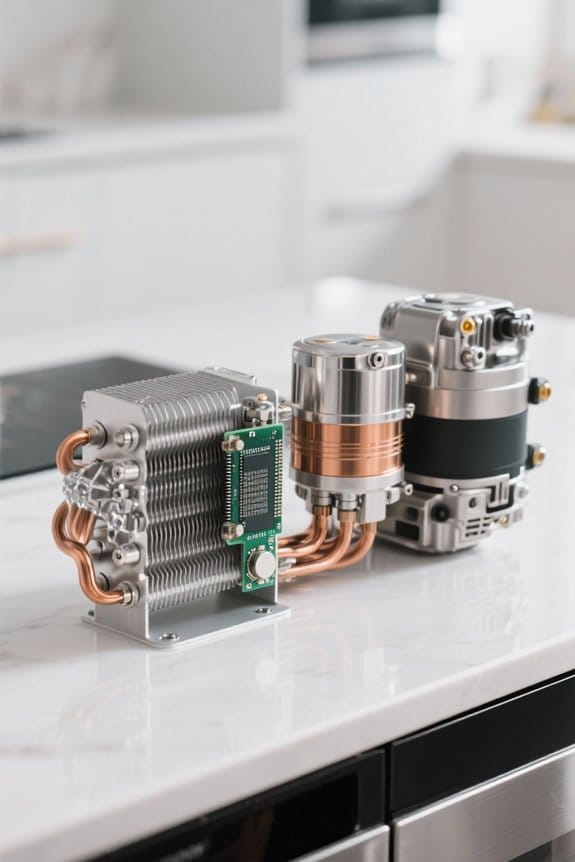
Understanding the cooling technology behind mini-fridges clarifies their performance capabilities. Most mini-fridges use compressor technology. This method uses refrigerants that change from gas to liquid, providing efficient cooling. Compressor mini-fridges can reach and maintain temperatures as low as -20°C, which is perfect for freezing items like meats and ice cubes. In contrast, thermoelectric coolers offer limited cooling, typically around 50°F. While they’re often quieter and have fewer moving parts, their performance can vary with external temperatures. These coolers also struggle with freezing, making them less ideal for serious refrigeration needs. If you need crunchy veggies or fizzy drinks stored at stable temperatures, a compressor mini-fridge is the better option. Additionally, the energy efficiency of compressor models often provides significant savings on electricity bills, especially when compared to their thermoelectric counterparts.
How Thermoelectric Coolers Operate
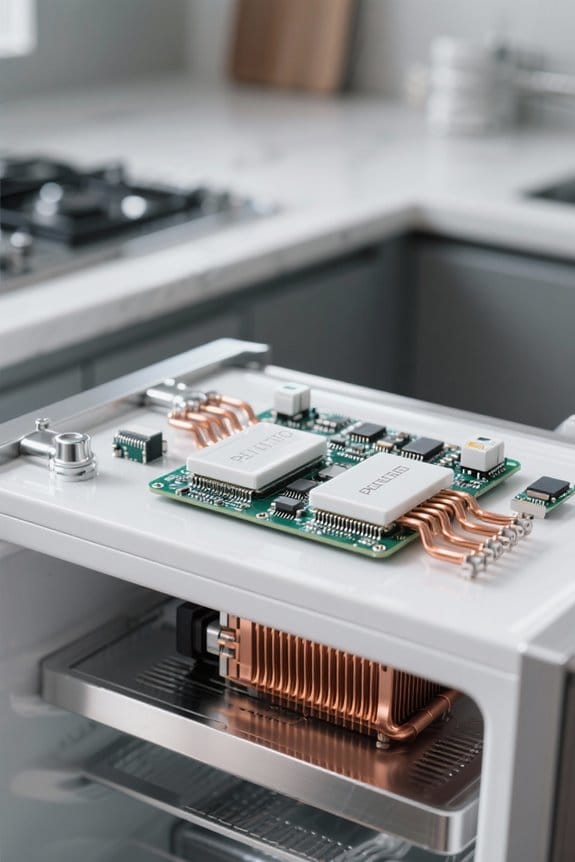
Thermoelectric coolers operate on a principle called the Peltier effect. When an electrical current flows through these coolers, it creates a heat differential. This produces a cold side and a hot side, leading to effective cooling. Compared to traditional mini-fridges, thermoelectric coolers lack moving parts and refrigerants, which makes them lightweight and compact. However, their cooling efficiency can be influenced by ambient temperature. They often struggle to maintain temperatures below 50°F, making them less ideal for storing perishables. Continuous use may cause overheating and device failure, so intermittent operation is essential. Additionally, temperature fluctuations can exceed 10°F, impacting reliability. Consider these factors when choosing thermoelectric coolers for your needs. Some models, like the Antarctic Star Compact Mini Fridge, demonstrate efficient cooling capabilities down to 32°F below ambient temperature.
Key Differences Between Thermoelectric and Compressor Models
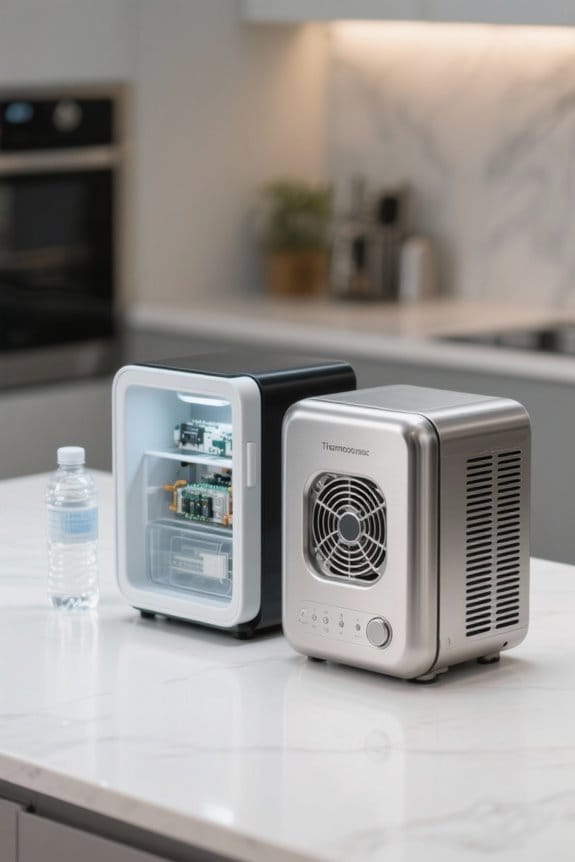
While both thermoelectric and compressor mini fridges serve the purpose of keeping items cool, they differ greatly in performance and design. Thermoelectric models operate using the Peltier effect, maintaining temperatures around 50°F. In contrast, compressor fridges utilize refrigerants and can achieve chilling temperatures as low as 32°F, making them ideal for perishable items. Compressor units cool quickly, reaching freezing temperatures down to -20°C, while thermoelectric systems struggle to dip below 0°C. Additionally, ambient temperature affects thermoelectric performance considerably, leading to variations of up to 20°F. Although thermoelectric fridges are compact and quieter, compressor models provide reliable cooling for sensitive items, such as food and medicine. Overall, the choice hinges on your specific cooling needs and storage requirements. It’s also essential to consider energy efficiency ratings when selecting between the two types of mini fridges.
Performance Limitations of Thermoelectric Coolers
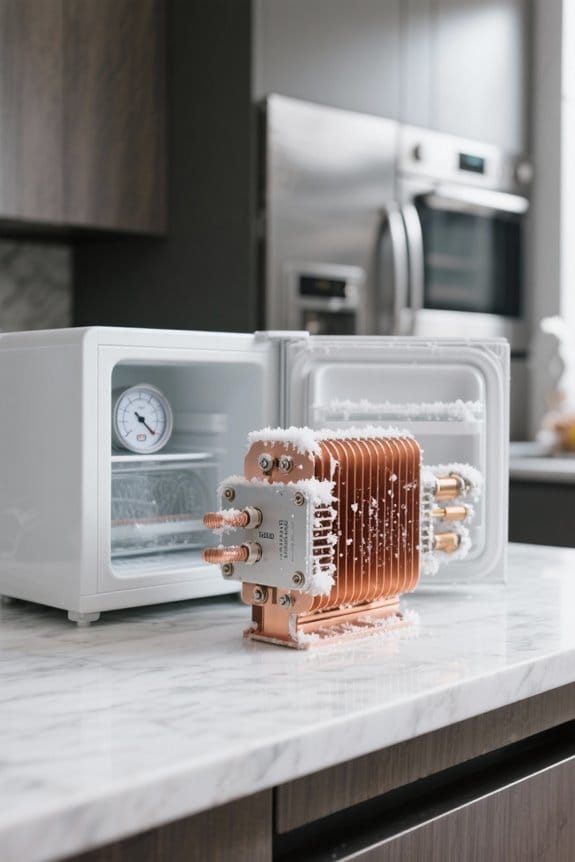
Although some consumers may appreciate the compact size of thermoelectric coolers, they come with considerable performance limitations. These coolers typically struggle to achieve or maintain temperatures below 50°F. This makes them unsuitable for items needing refrigeration under 40°F. Their efficiency drops considerably in warmer environments, often fluctuating over 10°F. We need to be aware that continuous operation may lead to overheating and failure. Many users might not realize they should let the cooler rest. With an average cooling range of -5°C to 65°C, thermoelectric models simply can’t compete with compressor fridges, which can reach temperatures as low as -20°C. This limits their use for perishable foods, fizzy beverages, and crunchy snacks. Additionally, the convenience of compact designs in personal coffee makers highlights the importance of effective space utilization in small environments.
Temperature Stability in Compressor Mini-Fridges
A compressor mini-fridge is a reliable choice for maintaining stable temperatures, which is fundamental for storing perishable foods. These models typically keep contents below 40°F, ensuring safety for items like dairy, meats, and salads. They use a refrigerant cycle that allows them to reach temperatures as low as 32°F or lower for freezing. Unlike thermoelectric coolers, compressor units aren’t easily affected by changes in ambient temperature. This stability is essential, especially in warm climates. Additionally, they manage long-term temperature stability effectively, with fluctuations typically within a narrow range. Reports show that compressor mini-fridges outperform thermoelectric models, consistently maintaining necessary refrigeration temperatures across various conditions. This performance is critical for preserving food quality and keeping it crunchy and fizzy. Furthermore, models with effective temperature control features provide even more reliability in maintaining the ideal storage environment.
Advantages of Compressor Refrigerators
When choosing a mini fridge, understanding the advantages of compressor refrigerators can make a big difference. Compressor models have a high cooling capacity, chilling down to -18°C, which is perfect for keeping meats and ice cream frozen. They also maintain stable temperatures even in hot rooms, ensuring your food stays safe and fresh. Their quick cooling capability lets us reach the needed temperature fast, ideal for those moments when we need chilled drinks or fresh fruits immediately. Additionally, compressor refrigerators typically offer a wider temperature range than thermoelectric coolers, providing versatility for different food and beverages. While they might consume more energy, they guarantee consistent performance for everyday use, making them a reliable choice for many households. Furthermore, their energy efficiency ratings contribute to lower electricity bills, making them a cost-effective choice for long-term use.
Disadvantages of Thermoelectric Coolers
While thermoelectric coolers have their advantages, they also come with notable disadvantages that can impact your decision. One considerable issue is that these models typically struggle to reach temperatures below 50°F. This limits their ability to cool perishable items effectively. Their efficiency is heavily influenced by ambient temperatures, causing performance fluctuations of up to 20°F. Users should also be aware that continuous operation can lead to overheating and eventual failure. Although they feature no moving parts, ensuring low maintenance, their limited cooling capacity makes them less effective for larger items or demanding cooling needs. Compared to compressor refrigerators, their narrower temperature range limits freezing potential and maintaining low temperatures considerably. Additionally, many thermoelectric units lack the energy efficiency options found in compressor models, leading to higher energy consumption over time.
Ideal Use Cases for Each Type of Refrigerator
Understanding the ideal use cases for each type of refrigerator helps us make informed choices. Compressor mini fridges are perfect for storing perishable items. They maintain stable temperatures between 32°F to 40°F and use refrigerant to guarantee consistent cooling. This stability is essential for longer-term use and effective cold storage. On the other hand, thermoelectric mini fridges work best for beverages and snacks in moderate conditions. They cool items around 50°F but are less effective for strict refrigeration needs. For camping or road trips, their lightweight design and low noise levels make them easy to transport. In hot environments, compressor fridges outperform thermoelectric models, maintaining proper function regardless of external temperatures. Additionally, choosing models with energy efficiency ratings ensures lower utility bills and better operation.
Recommendations for Reliable Mini-Fridges
For anyone looking to invest in a reliable mini-fridge, we recommend focusing on models that deliver consistent cooling for perishable items. The Magic Chef HMDR31GSE stands out for its impressive freezer performance, utilizing refrigerant gas for efficient chilling. This model is often praised as one of the best in the market, ensuring your icy treats remain perfectly crunchy. Another great choice is the Insignia NS-CF30SS9. This fridge is known for maintaining stable temperatures and affordability, making it a go-to for many consumers. Both options employ compressor technology, providing dependable cooling that thermoelectric models often fail to match. Additionally, considering the importance of ice texture can help you choose the right appliances for summer enjoyment. Availability is easy to check at major retailers, like Home Depot for Magic Chef and Best Buy for Insignia.
Comparison of Energy Efficiency Between Both Types
Energy efficiency is a key factor when choosing between thermoelectric and compressor mini fridges. Thermoelectric models typically consume less power, making them suitable for low cooling needs or low-temperature settings. They excel in quiet operation, using the Peltier effect. However, their efficiency drops above 80°F, struggling to maintain ideal cooling. In contrast, compressor mini fridges usually have higher energy consumption due to their powerful cooling capabilities for perishables. They efficiently maintain lower temperatures, offering stability regarding energy efficiency, especially in fluctuating environments. If you need consistent cooling, compressor models are the better choice. For light use or portable situations, thermoelectric fridges might save on energy, but always consider your cooling requirements and usage conditions carefully.
Frequently Asked Questions
Which Is Better Thermoelectric or Compressor Mini Fridge?
We’ve found that compressor mini fridges outperform thermoelectric models for energy efficiency and consistent cooling. While thermoelectric units can be quieter, they don’t maintain low temperatures as reliably, making compressors the better choice overall.
Is Thermoelectric Cooling Better Than Compressor?
We think thermoelectric cooling’s energy efficiency shines in low-demand situations, but for robust temperature control and quick cooling, compressor systems outperform. Ultimately, it depends on what our specific cooling needs are.
What Are the Disadvantages of Thermoelectric Coolers?
Like a candle flickering in the wind, thermoelectric coolers face issues with power consumption and inconsistent temperature control. They struggle with perishable storage, often overheating, and can’t match the efficiency of compressor models.
Are Compressor Fridges Better?
Yes, we believe compressor fridges are better for their quicker cooling and stability. While they may consume more energy, their overall efficiency and performance justify the costs, especially for long-term storage needs.


