As an Amazon Associate, we earn from qualifying purchases. Some links on this site are affiliate links at no extra cost to you. Our recommendations are based on thorough research and editorial judgment.


Organizing Small Fridges: Airflow and Cold Spots

To optimize small fridges, we must guarantee proper airflow and know where cold spots are. The back and middle shelves are best for perishables. Avoid overcrowding, which blocks airflow—keep the fridge below 75% capacity. Store eggs and milk on middle shelves, while raw meat should go on the bottom. Use crisper drawers for fruits and veggies to maintain freshness. By following these guidelines, we can keep food safe and crisp, and there’s more to reflect on as we organize.
Key Takeaways
- Store perishable items like raw meat and dairy on the back and middle shelves, where airflow is optimal.
- Avoid overpacking the fridge; maintain space below 75% capacity to facilitate cold air circulation.
- Utilize the crisper drawer for fruits and vegetables, adjusting humidity levels accordingly for each type.
- Follow the FIFO rule to use older items first, minimizing waste and ensuring freshness.
- Regularly clean the fridge to prevent cold spots and maintain consistent temperatures for food safety.
Importance of Airflow in Refrigerator Organization
Airflow is critical for keeping our food fresh in small fridges. To keep our refrigerator organized, we must guarantee proper airflow. Cold air circulates from the back to the front. This makes the rear and middle shelves the best storage areas for perishable items like dairy and raw meat. If we overpack the fridge, it obstructs airflow, creating cold spots and risking food safety. We should utilize shelves and bins effectively to enhance cooling performance, allowing cold air to circulate freely around our items. Regular cleaning also plays a key role, as it helps maintain airflow. By keeping items separated, we facilitate better ventilation, extending the freshness of our food and preventing spoilage. Additionally, energy efficiency is important, as it helps reduce overall electricity consumption while maintaining optimal temperatures.
Identifying Cold Spots for Optimal Food Storage
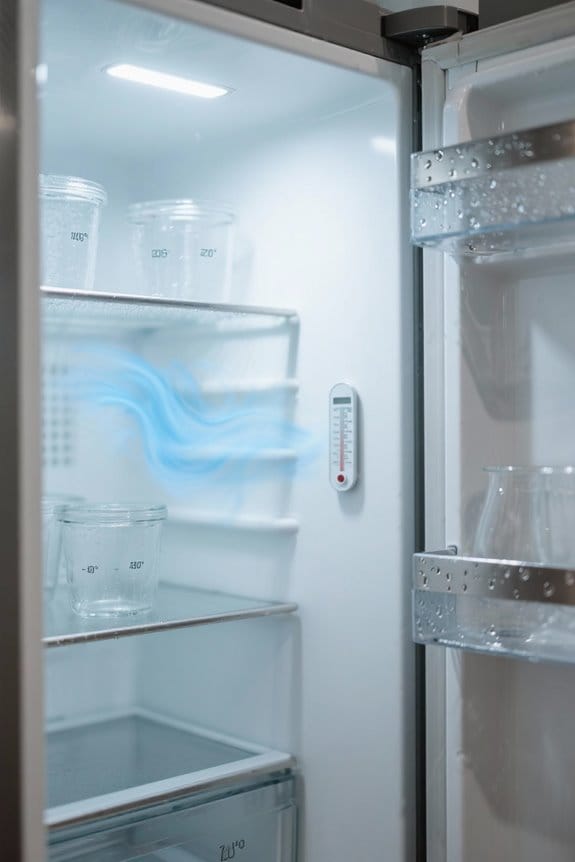
When we think about our fridge, we need to identify cold spots for ideal food storage. The coldest areas are at the back, where airflow is efficient. This is perfect for storing raw meat, fish, and dairy products. Avoid placing sensitive items like eggs in the fridge door, as it’s the warmest zone due to constant opening. The middle shelf maintains a stable temperature, making it great for leftovers and processed foods. For fruits and leafy greens, utilize the crisper drawer; high humidity keeps greens crunchy, while low humidity is better for fruits like apples. Regularly deep cleaning our fridge helps minimize food spoilage by ensuring optimal airflow and maintaining consistent temperatures throughout. Additionally, using an ice maker with self-cleaning functionality can enhance efficiency and help keep food at the right temperatures during summer gatherings.
Strategies for Maximizing Space and Minimizing Overcrowding

Keeping our fridge organized isn’t just about identifying cold spots; it’s also about maximizing space and reducing overcrowding. We can start by strictly following the FIFO rule, using older items first to maintain freshness. Grouping similar items together not only promotes better accessibility but also minimizes overcrowding. We should utilize storage containers or drawer dividers to separate categories like dairy, produce, and leftovers. Avoid exceeding 75% capacity to guarantee proper airflow, essential for temperature consistency. Regularly cleaning out expired items and consolidating duplicates will free up space and enhance fridge efficiency. Additionally, energy-efficient designs can help maintain consistent cooling while saving electricity. These strategies help us create a tidy refrigerator environment, making it easier to find that crunchy carrot or fizzy drink when we need them.
Best Practices for Storing Sensitive Items

One key aspect of refrigerator organization is understanding how to store sensitive items properly. To maximize freshness, eggs and milk are best stored on the middle shelves, where temperatures are stable. Raw meat should always be placed on the bottom shelf, preferably in a dedicated drawer to avoid cross-contamination. When we store fruits and veggies, keep ethylene-producing fruits, like apples and bananas, away from delicate vegetables to prevent spoilage. For herbs, place them in a jar of water, covered loosely, to maintain humidity and extend freshness. Additionally, we should organize our fridge by sealing leftovers in shallow glass containers, as this cools food faster and improves airflow, while keeping our fridge clean and efficient. Using compact ice cream makers like the DASH My Pint Ice Cream Maker can also help maintain an efficient kitchen by allowing for quick homemade treats without taking up much space.
Maintaining a System for Regular Cleaning and Inventory Management

A solid cleaning and inventory management system can make a significant difference in maintaining an organized fridge. We should make time every two to three months for a thorough clean-out, eliminating stale food and preventing bacteria. One of our best tips and tricks is to organize items together, grouping similar foods to streamline access. A grocery list on a magnetic board can help us track what’s inside, so we use items before they spoil. By regularly checking expiration dates and placing newer items at the back of the fridge, we can cut down on food waste. This approach makes our fridge much better and helps keep everything fresh, making it much easier to maintain a balanced inventory.
Frequently Asked Questions
How to Best Organize a Small Fridge?
Let’s leverage our small fridge’s potential! By utilizing fridge zones, maximizing space with appropriate container sizes, and employing stacking techniques, we can enhance temperature maintenance, boost food safety, and implement a labeling system for ultimate efficiency.
How Do I Arrange My Small Fridge?
To arrange our small fridge effectively, we’ll use fridge organization tips like grouping items by type, maximizing space with strategic shelf height, and ensuring easy access while maintaining food safety in designated temperature zones.
What Not to Do With a Mini Fridge?
We shouldn’t overload shelves or block vents, and we must avoid storing hot items. Let’s never ignore expiry dates, mix food types, neglect spill cleanup, pile containers, or store open drinks. It’s essential!
How to Properly Set up a Mini Fridge?
To set up our mini fridge, let’s guarantee maximum cooling efficiency. We’ll adjust mini fridge temperature, strategically place essential items, utilize door shelf use, and enhance air circulation by adjusting shelf height for proper item placement.


