As an Amazon Associate, we earn from qualifying purchases. Some links on this site are affiliate links at no extra cost to you. Our recommendations are based on thorough research and editorial judgment.


Eco-Friendly Disposal and Recycling of Small Kitchen Devices

When it comes to eco-friendly disposal and recycling of small kitchen devices, we should first unplug, clean, and dismantle our appliances. Remove any batteries and secure separate parts, like glass or metal pieces. Then, consider donating functional appliances to charities such as Goodwill. For broken appliances, our local recycling center or scrap metal program can help. Remember, recycling conserves resources and reduces landfill waste. We’ll explore more options to support our eco-conscious habits.
Key Takeaways
- Clean appliances thoroughly to prevent contamination before recycling, and ensure they are unplugged for safety.
- Donate functional small kitchen devices to charities like Goodwill or Habitat for Humanity to extend their lifecycle.
- Utilize local recycling centers that accept broken appliances and follow their guidelines for hazardous materials.
- Participate in retailer take-back programs when purchasing new appliances to responsibly dispose of old ones.
- Recycling small appliances conserves resources, reduces landfill waste, and supports the circular economy.
Understanding Small Appliance Recycling
Understanding small appliance recycling is crucial for minimizing waste and conserving resources. Small appliances like coffee makers, toasters, and hair dryers can be recycled through established recycling programs. These programs dismantle devices to recover valuable materials such as metals, glass, and plastics, which reduces the need for new materials. Currently, about 12.5% of e-waste, including small appliances, is recycled in the U.S., representing a significant opportunity for improvement. Proper disposal is essential for maximizing the impact of recycling efforts. This means cleaning appliances and removing batteries before recycling. By participating in small appliance recycling, we can lower energy consumption and contribute to a more sustainable future for our environment. Additionally, the use of eco-friendly materials in some small appliances further supports recycling initiatives. Let’s actively engage in proper disposal today.
How to Prepare Your Small Appliances for Recycling

Before recycling our small appliances, we need to take several important steps to prepare them. First, let’s unplug each appliance for at least 24-48 hours. This lets any residual heat or cooling dissipate safely. Next, we should clean them thoroughly, removing any food residue or debris. This assures proper preparation for recycling and prevents contamination.
It’s also key to secure or detach parts like glass carafes or metal attachments, as they are often recyclable separately. We must check with our local recycling facility for specific guidelines on hazardous materials, like batteries. Batteries require separate handling, so let’s remember to remove them from battery-operated devices. Additionally, many appliances now incorporate BPA-free materials, which ensures they can be recycled safely without posing environmental risks. Following these steps guarantees that we recycle responsibly and sustainably.
Options for Responsible Disposal of Small Appliances

After preparing our small appliances for recycling, we have several options for responsible disposal that can further our eco-friendly efforts. We can donate functional appliances to charities like Goodwill or Habitat for Humanity, helping those in need while reducing landfill waste. For broken devices, local recycling centers accept items like toasters and coffee makers, ensuring environmentally responsible disposal and material recovery. If our appliances contain at least 75% metal, we could use scrap metal programs for recycling. Retailers may also offer take-back programs during new purchases, allowing us to responsibly dispose of old appliances. By exploring these options, we actively participate in maintaining a cleaner environment through effective appliance recycling services and conscientious choices. Additionally, many air fryers come with dishwasher-safe components, making them easier to clean and more appealing to use, which supports longer product lifespans and reduced waste.
Benefits of Recycling Small Kitchen Devices

Recycling small kitchen devices offers numerous practical benefits that we shouldn’t overlook. By recycling, we conserve valuable resources like metals and plastics, preventing the need for raw resource extraction. Proper recycling diverts hazardous waste from landfills, which helps reduce landfill size while minimizing our environmental impact. Additionally, recycling appliances often requires less energy than producing new items from virgin materials, leading to a smaller carbon footprint for households. It’s important to remember that some electronic components contain harmful substances, such as lead and mercury. Recycling guarantees these toxins don’t leach into our environment. Finally, by supporting the circular economy, we’re keeping materials in use longer, creating jobs, and stimulating local economies. Furthermore, the energy efficiency of small kitchen devices like mini ice machines contributes to their overall environmental performance, making recycling them even more beneficial. Let’s embrace these benefits and recycle wisely.
Charitable Organizations for Donating Functional Appliances
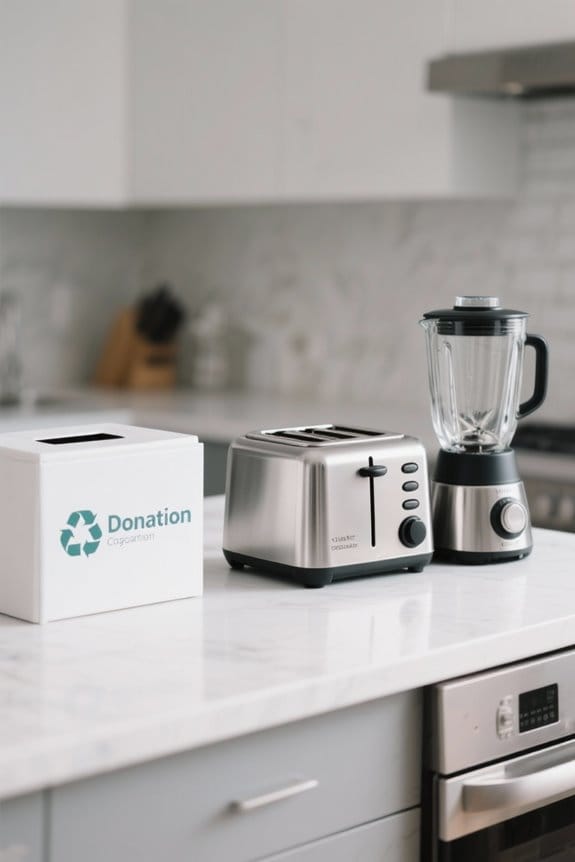
Donating functional appliances not only supports charitable organizations but also helps us contribute to a sustainable future. Charities like Goodwill, Salvation Army, and Habitat for Humanity welcome working small kitchen devices. By donating functional appliances, we keep usable items out of landfills and extend their life for those in need. Before we drop off a donation, let’s check the specific guidelines for accepted items, as each organization has its own criteria. Generally, modern appliances in good working condition are appreciated and more beneficial to families and individuals. Engaging in these sustainability efforts fosters community responsibility and eco-friendly practices in our neighborhoods. Additionally, considering the eco-friendliness of materials, such as those used in bamboo cutting boards, can enhance our commitment to sustainable living. Let’s get involved and make a positive impact together!
Environmental Impact of Improper Disposal
Although it may seem easy to throw away old kitchen appliances, improper disposal can harm our environment in significant ways. These devices often contain hazardous materials like lead and mercury, which can leach into our soil and groundwater, posing serious risks. We’re contributing over 3.4 million tons of electronic waste each year in the U.S., exacerbating landfill issues and depleting valuable resources. Many small appliances house recoverable materials, including copper and aluminum, which we waste by not recycling. Shockingly, the current e-waste recycling rate is only 12.5%. When we toss appliances in landfills, it not only wastes materials but also releases toxic substances, threatening local ecosystems and affecting human health. We must take responsible steps toward eco-friendly disposal and recycling at recycling centers. Additionally, considering models with removable, dishwasher-safe components can contribute to better sustainability by encouraging more efficient use and recycling of small kitchen appliances.
Partnering With Professional E-Cycling Services
When we think about getting rid of old kitchen appliances, partnering with professional e-cycling services is one of the smartest options. These services, like CJD E-Cycling, guarantee safe handling of hazardous materials in our devices, protecting the environment. They efficiently separate recyclable materials—metals, plastics, and glass—for reuse, aiding in resource conservation. Additionally, e-cycling companies offer secure data wiping to protect our sensitive information. By utilizing these professional services, we not only reduce our ecological footprint but also promote sustainability by recovering valuable materials. Furthermore, many services provide documentation that confirms proper disposal, a must for businesses needing to comply with environmental regulations. Moreover, using energy-efficient models helps in minimizing overall waste and conserving power. Let’s make responsible choices for our appliances, keeping recycling top of mind.
Frequently Asked Questions
What Is the Best Way to Dispose of Small Appliances?
The best way to dispose of small appliances is through responsible disposal at e-waste facilities. We can explore eco-friendly recycling options or consider kitchen gadget alternatives, ensuring we protect our environment and community resources together.
Can I Put Small Electrical Items in the Recycle Bin?
No, we can’t put small electrical items in the recycle bin. Following e-waste guidelines, we should explore local disposal options that properly handle these items to guarantee responsible recycling and minimize environmental impact.
How to Get Rid of Kitchen Equipment?
We can get rid of kitchen equipment by exploring appliance donation options for charity, opting for eco-friendly replacements, and utilizing kitchen organization tips to declutter responsibly. Let’s support sustainability and help others along the way!
What Is the Best Way to Dispose of Old Electronic Devices?
Isn’t it time we embraced the future? For the best way to dispose of old electronic devices, we should explore e-waste management through eco-friendly alternatives and participate in electronic recycling programs to guarantee responsible disposal.


