As an Amazon Associate, we earn from qualifying purchases. Some links on this site are affiliate links at no extra cost to you. Our recommendations are based on thorough research and editorial judgment.


Cold Brew in Small Batches: Ratios, Filtration, and Timing

To make cold brew in small batches, we should use a coffee-to-water ratio of 1:8 to 1:10. For stronger flavor, try a 1:5 ratio. We steep coarsely ground coffee for 12 to 24 hours, with 20 hours often being ideal. For clarity, utilize coffee filters or cheesecloth for filtration. Cold brew can be stored in the fridge for up to a week. Next, we’ll explore how to customize our brew to suit our tastes.
Key Takeaways
- Use a coffee-to-water ratio of 1:8 for small batches; adjust to 1:5 or 1:4.5 for stronger flavors.
- Steep coarsely ground coffee for 12 to 24 hours, with 20 hours providing optimal flavor.
- Filter using coffee filters or cheesecloth for clarity; fine mesh may leave sediment.
- Store cold brew in a sealable jar for up to one week while maintaining freshness.
- Serve with a common dilution of 1:1 water; customize with milk or syrups as desired.
Understanding Cold Brew Coffee Basics
Cold brew coffee is a revitalizing option we’ll all appreciate, especially since it’s brewed differently than traditional methods. To make cold brew, we need coarsely ground coffee that resembles sea salt. The ideal steeping time ranges from 12 to 24 hours. We can use a simple mason jar or a dedicated device, like the Toddy Cold Brew System. Mixing coffee grounds with water generally follows a brew ratio of 1:8 to 1:10 for best flavor. After steeping, we filter the mixture to remove the grounds, creating a smooth concentrate. Once brewed, this cold brew should be stored in the refrigerator. It can last up to a week while maintaining its delicious flavor, so we can enjoy it throughout the week. Additionally, using energy-efficient appliances like microwaves not only helps with cooking tasks but also reduces power consumption over time.
Recommended Coffee-to-Water Ratios
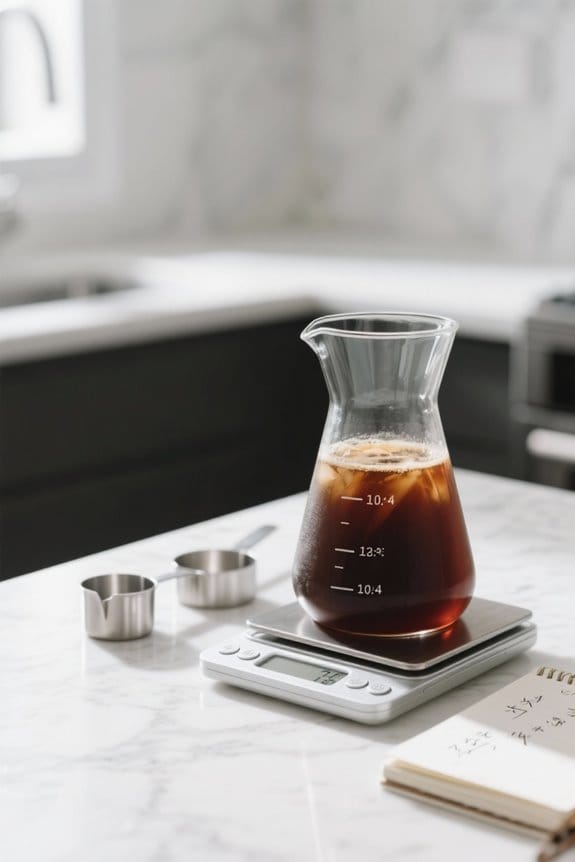
When experimenting with coffee-to-water ratios, it’s essential to find the right balance for your taste. A common ratio for small batch cold brew is 1:8, using 1 gram of coffee for 8 grams of water. This provides a balanced flavor profile. If you prefer a cold brew concentrate, you can use a stronger ratio of 1:5. For a richer taste experience, try a 1:4.5 ratio before dilution. A solid guideline is to use around 125 grams of coffee for a liter of water when making cold brew coffee. Remember, personal preferences vary. We can adjust these ratios to create a stronger brew or a milder flavor based on the amount of water we add. Additionally, achieving energy efficiency in your cold brew preparation can make the process more sustainable and cost-effective without compromising on taste.
Recommended Products

Made in United States

Toddy filters are uniquely designed specifically for cold brew filtration, extracting all the natural and delicious flavors of coffee and tea, and leaving behind the bitter acids and oils

Product Type:Coffee Filter
Brewing Time Considerations

Finding the right brewing time can make a big difference in our cold brew experience. Cold brew typically requires a steeping time between 12 to 24 hours. Many enthusiasts suggest about 20 hours for optimal flavor extraction. If we steep for a shorter time, we’ll get a milder flavor, while longer steeping results in a stronger concentrate. We can even steep for 36 hours at room temperature, but we should monitor bitterness closely. On the other hand, steeping in the fridge for at least 18 hours still yields a tasty drink. Remember, personal taste greatly impacts our preferred steeping times, so experimentation is key. Adjusting the coffee-to-water ratio helps us find that ideal balance for our cold brew.
Recommended Products

PRE-GROUND COFFEE FILTERPACKS: Delicious coffee in a convenient, pre-measured format. Works in any 4-cup drip coffee maker. One pot per package. Filters are included!

Use carafe, strainer and holder to create delicious "slow coffee". Holder has markings for measuring the coffee

PREMIUM QUALITY PAPER FOR A RICH, ROBUST CUP OF COFFEE – Tupkee large coffee filters 12 cup are made in the USA from heavy-weight special grade paper, so the water flows properly through coffee ground, and prevents grounds from filtering through, allowing for better immersion of the grounds in hot water, that preserves the taste and provides the perfect extraction for a richer more flavorful coffee
Effective Filtration Techniques

How can we guarantee that our cold brew is both clear and enjoyable? Effective filtration techniques are essential for achieving that crisp, invigorating taste. If we’re using a mason jar, we should strain the mixture through a coffee filter or cheesecloth. This separates the coarse ground coffee from the liquid and enhances flavor clarity. For a smoother option, we can try a cold brew coffee maker like the Hario Mizudashi, which has a built-in filter. Paper filters provide excellent clarity, while cheesecloth retains oils for a fuller mouthfeel. Fine mesh sieves work too, but we might risk some sediment. By tailoring our filtration method, we can greatly enhance the final texture and clarity of our cold brew. Additionally, motor wattage considerations in blending can also influence how well we extract flavors during the cold brew preparation process.
Recommended Products

Ideal Value Money Saver: our pack includes 200 cold brew coffee filter bags; Whether for home or commercial use, the quantity perfectly meets your needs, offering exceptional value and making it the ideal choice for all coffee lovers

CoffeeSock Reusable Organic cotton filters are made to fit an industry standard 5 gallon urn

DON'T PAY $300/YEAR FOR DISPOSABLE PAPER FILTERS !!! OURS ARE REUSABLE. Unlike others', our highly regarded filters are reusable and are lined to provide a 2-ply "second line of defense" against fine grounds making their way into the brew. Sturdy construction easily withstands the rigors of repeated use.
Experimenting With Flavor Customization
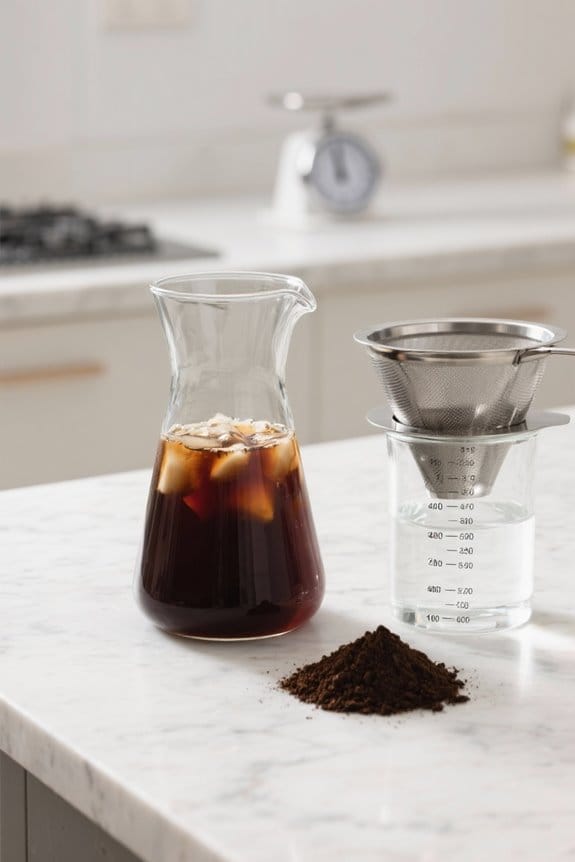
In crafting a personalized cold brew, there are countless ways to elevate the flavor. First, we should consider the coffee to look for—Ethiopian or Brazilian whole coffee beans can enhance unique flavor profiles. Adjusting the coffee per water ratio is essential, with a common 1:5 for concentrate and about 1:15 for ready-to-drink options. Adding ingredients like cinnamon or vanilla can create delightful twists. We can also incorporate milk, cream, or non-dairy alternatives to customize our brew’s creaminess. After brewing with our cold brew system, we can stir with a spoon and filter it using a mesh sieve. Additionally, using a non-slip design for your cold brew equipment ensures a safe and steady brewing process. Finally, experimenting with flavored syrups or spices enables us to craft drinks that mirror popular commercial cold brews.
Storing and Serving Your Cold Brew
One week is all it takes to enjoy your cold brew while it stays fresh in the refrigerator. We can store cold brew coffee in a sealable jar to avoid exposure to light and air. After brewing, we use a simple coffee recipe, mixing grounds to water at a 1:4 ratio. Once ready to strain, we’ll put it in the fridge for a week. When it’s time to serve, we can dilute it with filtered water, usually in a 1:1 ratio. Pouring our cold brew over ice cubes keeps it cool and prevents dilution. For an extra treat, consider adding whole milk or flavored syrups to customize our drink. Remember to clean your equipment regularly to prevent any bacteria growth and keep your cold brew tasting great. Enjoy our invigorating cold brew!
Troubleshooting Common Cold Brew Issues
When brewing cold brew coffee, we can encounter a few common issues that affect taste and quality. If our brew is too strong or bitter, adjusting the coffee-to-water ratio to 1:8 can help. For a concentrate, we might need to dilute further. A weak or watery drink can result from insufficient steeping time; try steeping for 18 to 24 hours for better flavors. Sediment can be a nuisance, easily reduced using finer filtering techniques like paper filters or double-filtering through cheesecloth. To avoid over-extraction, make certain we use a coarse grind size, as finer grinds lead to bitterness. Finally, for the best taste, we should store the cold brew in the fridge and consume it within a week to prevent stale flavors. Additionally, using the right coffee-to-water ratio can greatly influence the final flavor of your brew.
Frequently Asked Questions
What Is the Ratio for Small Batch Cold Brew?
For small batch cold brew, we’ve found a 1:8 coffee-to-water ratio works like a charm. With proper grind size and steeping time, our flavor profile impresses, and we enjoy experimenting with various coffee types and serving suggestions.
What Is the 15 15 15 Rule for Coffee?
The 15 15 15 rule for coffee brewing involves 15 grams of coffee, 15 ounces of water, steeped for 15 hours. This method guarantees ideal flavor extraction for balanced taste profiles and controlled coffee strength.
What Is the 80/20 Rule for Coffee?
The 80/20 rule in coffee suggests that 80% of our flavor profiles come from high-quality beans. By focusing on ideal brewing techniques, grind sizes, and steeping times, we enhance extraction and caffeine content for the best experience.
What Is the Golden Ratio for Cold Brew?
Like finding the sweet spot in a symphony, our golden ratio for cold brew is 1:10, balancing coffee strength and flavor extraction. We consider grind size, steeping time, and water quality for ideal results.


