As an Amazon Associate, we earn from qualifying purchases. Some links on this site are affiliate links at no extra cost to you. Our recommendations are based on thorough research and editorial judgment.


Appliance Wattage Planning on a Single Circuit

When we plan our appliance wattage on a single circuit, we need to know power requirements. A standard 15-amp circuit safely provides 1,440 watts. High-wattage devices, like a refrigerator (930W running) or microwave (600W), can easily exceed this limit. As a result, we should carefully evaluate combined wattage to avoid overload. It’s essential to dedicate circuits for high-starting appliances to guarantee safety and efficiency. There’s more insight on specific appliances and best practices ahead.
Key Takeaways
- Determining the wattage of each appliance is essential to avoid exceeding the circuit’s capacity, particularly on a standard 15-amp circuit.
- Ensure total running wattage remains below 1,440 watts to maintain safe operation and prevent circuit overload.
- Account for high-starting wattage appliances, like refrigerators and air conditioners, which may spike during startup.
- Use dedicated circuits for high-wattage appliances to enhance performance and minimize risks of tripped breakers.
- Consult a licensed electrician to assess circuit load limits and ensure safe usage of multiple appliances on a single circuit.
Understanding Appliance Wattage and Power Requirements
When we look at appliance wattage, it’s important to understand how much power each device needs. Wattage ratings tell us the power consumption in Watts (W) or kilowatts (kW), where 1,000 Watts equals 1 kilowatt. This can vary considerably depending on the type of appliance. For example, a standard 120-volt, 15-amp circuit can provide a maximum of 1,800 watts safely. We should limit usage to around 1,440 watts to avoid overloading the circuit. High-starting wattage appliances, like refrigerators and air conditioners, draw more power briefly, which can trip circuit breakers. By knowing the wattage of our appliances, we can plan electrical use better, choose appropriate circuits, and guarantee compliance with safety standards. Additionally, understanding the energy consumption ratings of various appliances can aid in effective electrical planning.
Importance of Dedicated Circuits for High-Watt Appliances

To guarantee our high-watt appliances operate safely, we need dedicated circuits. These appliances require a dedicated circuit because they often exceed safe amperage limits for general-use circuits. For example, electric clothes dryers can draw significant starting wattage, which can trip breakers if not properly managed. An Energy Star refrigerator typically uses 930W while running, but it can spike up to 2,790W during startup. Since high-watt appliances need to power a single circuit, we should prioritize their installation on dedicated circuits. Doing this enhances our home’s electrical system, reducing overload risks. It keeps our appliances running efficiently and prolongs their lifespan. Safety and performance go hand in hand when we follow these essential practices for high-watt appliances. Additionally, energy efficiency considerations can help in selecting the right wattage for appliances, ensuring they run without excessive electricity usage.
Recommended Products

INSTALL WITH CONFIDENCE: Formerly ClipperCreek, the core technology that comes inside every Enphase EV charger has earned its award-winning reputation by delivering industry-leading durability and reliability. Now they're made even better with a 5-year limited manufacturer warranty and 24/7 customer support. This HCS-D50 hardwired home dual electric car charging station comes fully assembled and offers quick installation to a dedicated 50 Amp circuit with any licensed electrician.

INSTALL WITH CONFIDENCE: Formerly ClipperCreek, the core technology that comes inside every Enphase EV charger has earned its award-winning reputation by delivering industry-leading durability and reliability. Now they're made even better with a 5-year limited manufacturer warranty and 24/7 customer support. This HCS-80 hardwired home EV charger comes fully assembled and offers quick installation to a dedicated 80 Amp circuit with any licensed electrician.

ADVANCED DIGITAL HYBRID DESIGN: 50% quieter and 20% lighter than a traditional Champion 3500-watt generator, plus our Economy Mode feature saves fuel and extends engine life
Evaluating Combined Wattage for Multiple Devices

High-watt appliances often require dedicated circuits, but that’s just part of the equation. When we evaluate combined wattage for multiple devices, it’s crucial to sum the running wattage of all appliances we’ve plugged in. We should verify this total doesn’t exceed the circuit’s maximum capacity of 1,440 watts on a standard 15-amp circuit. Remember, air conditioning and large appliances often have higher current draws, especially during startup, needing 2 to 3 times their running wattage. For instance, if a refrigerator uses 930W running and 2,790W starting, we can’t run it with a microwave that draws 600W. Aiming for roughly 80% of the circuit’s maximum capacity keeps our electricity usage safe and efficient. Additionally, when considering multiple kitchen appliances like bread machines, it’s essential to account for their combined wattage to avoid overloading the circuit.
Recommended Products
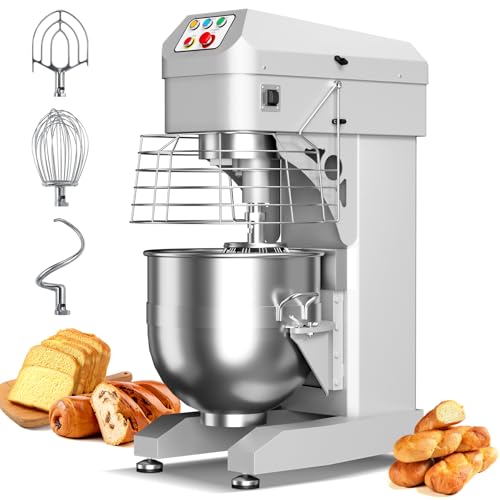
commercial standard :This commercial stand mixer has a 60 QT bowl that can mix up to 40 lbs/18 KG of dough at one time. The stainless steel bowl, dough hook, flat beater, rod,and wire whip are made of food-grade 304 stain-less steel all meeting international standards. Widely used in restaurants hotels,bakeries, pizzerias, commercial kitchens and more.

HUGE PORTABLE POWER: The WGen14500DF dual fuel generator is an ideal power source for jobsites and emergency backup of larger homes. Gas: 18,000 peak watts, 14,500 running watts; Propane: 16,000 peak watts, 13,000 running watts

The five heating element zones that give you the ultimate cooking flexibility: right front: 9"/12" dual element, 3000W (1800W+1200W), left front: 6"/9" dual element, 3000W (1500W+1500W), right rear: 6”, 1200W, left rear: 6”, 1200W, center: 7”, 100W Warming zone. The range gives you the power to master any meal.
Recommended Draw Limits for Electrical Circuits

Knowing the recommended draw limits for electrical circuits is crucial for safe appliance usage. For a 15-amp circuit, we should aim to draw no more than 12 amps, or 1,440 watts. This is about 80% of the circuit’s maximum capacity. In contrast, a 20-amp circuit can safely support up to 16 amps, or 1,920 watts, allowing us to run more appliances at once. We must pay attention to high-power appliances. Items like refrigerators and air conditioners often require dedicated circuits due to their initial power surge. It’s important to take into account the combined load of all devices on a single circuit. Excess wattage can lead to circuit overload, increasing fire hazards in our homes. Regularly checking wattage requirements guarantees safety. Additionally, understanding energy-efficient ratings for appliances can help minimize overall energy consumption on circuits.
Common Appliances That Require a Dedicated Circuit

When we consider our home appliances, it’s essential to identify which ones require dedicated circuits to operate safely and effectively. Certain household appliances need a dedicated circuit due to their high wattage. For example, electric ovens and ranges typically require 2,400 to 5,000 watts of electricity. Refrigerators should also be on a separate circuit to handle starting wattages that can spike to 2,790 watts. Larger dishwashers often necessitate a dedicated circuit for their running wattage, ranging from 1,200 to 1,500 watts. Electric dryers demand a separate 20-amp, 220-volt circuit, exceeding 5,000 watts during use. Finally, standalone freezers benefit from dedicated circuits, usually requiring about 700 to 1,200 watts. Always consult a licensed electrician to determine how much power is needed. Additionally, it’s important to consider energy-efficient models that help minimize electricity consumption without sacrificing performance.
Recommended Products

Multiple Cycles: Dry your laundry at home with this Black and Decker laundry machine. Our clothes dryer has 16 cycle selections to choose from for a variety of clothes and needs

Mega 9.0 cu. ft. Capacity – Extra‑large drum fits king‑size comforters, bulky loads, and family laundry in fewer cycles.

12 Drying Cycles, 8 Options: This versatile Kenmore gas dryer offers 12 drying cycles and 8 options to care for all your clothing and household fabrics. Reduce energy use by up to 8.2% with Energy Saver (compared to a normal cycle, more dry level, medium dry temp, 8-lb load)
Professional Consultation for Electrical Safety
To guarantee electrical safety in our homes, consulting a licensed electrician is essential, especially as we consider adding new appliances. They help us determine safe circuit draw limits, which are crucial for keeping our electrical systems functioning properly. A skilled electrician can assess the individual power needs of our appliances, especially high-draw appliances that have notable initial surge requirements. This way, we avoid exceeding the circuit’s maximum capacity, aiming to stay within 80% of that limit for safety. Regular evaluations are necessary to spot potential overload risks and enhance our overall electrical safety. By engaging a professional, we meaningfully reduce the risk of hazards, such as electrical fires, ensuring a safe environment for our families and belongings. Additionally, it’s important to consider the power rating of your appliances when planning your circuit load, as some may demand more energy than others.
Steps for Planning Appliance Usage on a Single Circuit
Efficient planning for appliance usage on a single circuit can save us from headaches down the road. First, we need to identify the amperage rating of our circuit breaker. A 15-amp breaker can handle up to 1,800 watts, while a 20-amp breaker allows for 2,400 watts. Next, we should calculate the total wattage of our appliances. It’s vital to stay below 80% of the circuit’s capacity, which means 1,440 watts for a 15-amp circuit. Also, remember that some appliances have high starting watts. For instance, a refrigerator can pull 2,700 watts briefly. We should use wattage information from appliance labels to avoid circuit overloads and prioritize usage of appliances with lower running watts. Staggering their usage can help too. Additionally, using energy-efficient appliances can significantly reduce overall wattage consumption, making it easier to stay within the circuit limit.
Recommended Products

Individual Temp. Control: Manage temperatures in four spaces using one 36,000 BTU outdoor unit with four 9,000 BTU indoor units; customize temperatures from 61-86℉ and select different modes for each room to meet varying needs

BUILT FOR YOUR BAR - Measuring 72.75″ W x 24.4″ D x 35.6″ H, this beer kegerator can tuck neatly under a bar counter, or serve as counter-height. The front-venting compressor requires no rear clearance, the self-evaporating water tray means no floor drain is required, and the unit runs on a standard 15-amp plug, meaning no specialist electrical work.

𝐂𝐎𝐎𝐊𝐓𝐎𝐏: The Galiano 36-inch. electric range comes with a 5-radiant elements cooktop for energy efficiency, temperature control, and even cooking. The 5 Radiant Burners that combine a total cooking surface output of 7,700 Watts. The Ceramic Glass cooktop is easy to clean. Front Right Radiant Element Output 3000 W, Front Left 2,200 W, Rear Right 1,200 W, Rear Center 100 W, and Rear Left Element Output 1,200 W
Frequently Asked Questions
How Many Watts Can One Circuit Breaker Handle?
One circuit breaker can handle varying wattage limits: 1,440 watts for 15-amp, 1,920 watts for 20-amp. We must always consider circuit capacity, appliance requirements, and load calculations for best energy efficiency and circuit safety.
Can I Run 3000 Watts on a 20 Amp Circuit?
We can’t run 3,000 watts on a 20-amp circuit. Wattage calculations show excessive wattage risks tripping breakers, compromising safety standards. Ensuring appliance compatibility and proper power distribution is essential for safe circuit load management.
How Many Appliances Can Run on One Breaker?
We can generally run two or three appliances on one breaker, following safety guidelines. By calculating appliance wattage and circuit load, we guarantee we stay within the breaker capacity and comply with electrical code.
Does a 1000 Watt Microwave Need a Dedicated Circuit?
Yes, a 1000-watt microwave needs a dedicated circuit to meet its requirements. We’d guarantee proper wattage calculations prevent circuit overload, supporting electrical safety while maximizing microwave usage alongside our other kitchen appliances without complications.


